After the multi-column STICK has completed inspection, visual inspection or sealing test, the non-conforming products will be independently eliminated. Although the quality of the single packet is guaranteed, the original continuous queue immediately appeared vacancies. If the missing product directly enters a fixed number of bags or boxing stations such as ten bags and twenty bags, it may cause insufficient combinations, complete sets of removal, and waste of packaging materials, and even force the rear equipment to frequently stop and wait. The core role of the online cache refill system is to establish an adjustable buffer layer between high-speed primary packaging and continuous secondary packaging. When each Stick leaves the packaging machine, the system should record its source channel, production sequence, detection results and culling status; the rejection of the sensor also needs to confirm whether the non-conforming product really leaves the main conveying path. Only qualified products with a clear identity and status can enter the cache and subsequent reorganization. When the queue is missing, the control system releases the qualified Stick from the cache area according to the number of target combinations, cache stock and downstream beats. The feeding process can be diverted conveying, servo distributing, synchronous belt cache or robot picking, etc., but the product direction, spacing and sequence must be ensured to meet the continuous feeding requirements of bagging and packing machines. The system should also set the minimum and maximum cache amount, first in first out, maximum residence time and multiple missing bits processing rules to avoid over-cache, backlog of products or incorrect replenishment. After the reorganization is completed, the quantity and arrangement status of the product need to be re-confirmed through the photoelectric, vision or counting sensors. If the cache is insufficient, too many consecutive removals or the replacement failure fails, the system should suspend the current combination and alarm, instead of letting incomplete product groups enter the downstream. DOT is based on the JOYEA multi-column Stick packaging platform, and the product tracking, culling confirmation, dynamic caching, missing feed, combination review and batch number The records are integrated into a continuous control system. While ensuring the accuracy of the combined quantity, the entire group is reduced and the rear channel is stopped, and the efficiency of the entire line is improved and the quality traceability is improved.
C04 · PACKAGING ENGINEERING NOTE
Online caching and refill system after unqualified Stick rejection: engineering method of missing position identification, dynamic reorganization and continuous secondary packaging
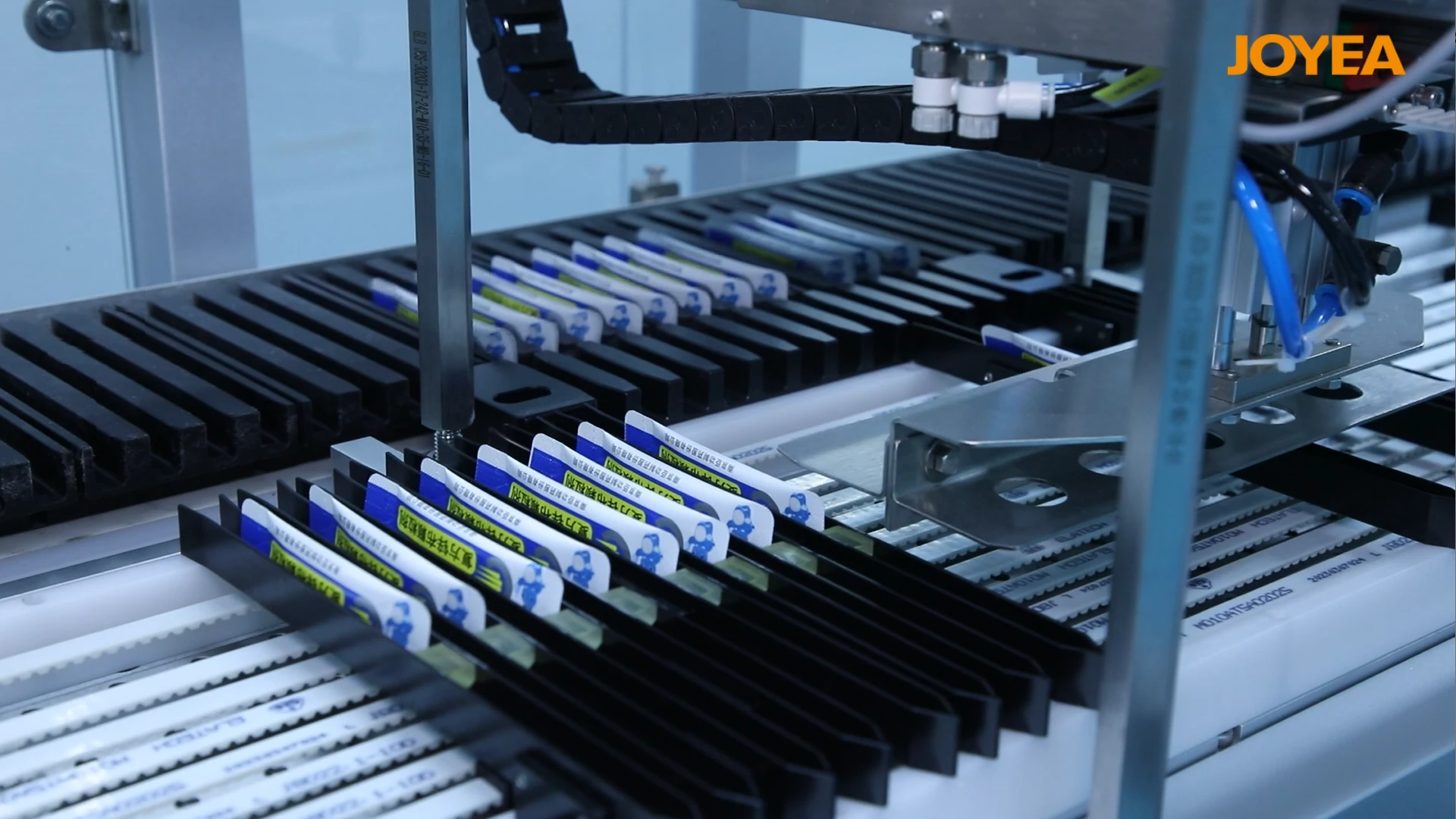
After multiple columns of STICK are checked or visually tested, once the unqualified product is removed, there will be vacancies in the original queue. If you directly enter the counting bag or boxing station, it may lead to insufficient combinations, complete group removal and additional rework. DOT uses online caching, product identity tracking, absent position identification and supplement reorganization to re-form a complete product group to a qualified Stick, and then stably hand it over to the secondary packaging equipment, while retaining the batch boundary and quality traceability.
How Rejection Disrupts Secondary Packaging
Primary packaging commonly delivers sticks in a defined lane pattern, count, orientation, and pitch required by the downstream bagger or cartoner. Removing one stick breaks that pattern and can create an incomplete group at the loading point. Conventional responses may discard the complete group or stop production for manual replenishment, increasing handling and rework. Online gap recovery aims to isolate only the confirmed nonconforming pack while allowing the remaining verified good sticks to continue. The system must do this without losing product identity, introducing uninspected packs, or disturbing the timing relationship with the secondary machine.
Coordinating Buffering, Identification, and Replenishment
After inspection and rejection, accepted sticks enter a controlled buffer while the system retains their lane, inspection status, current position, and intended group assignment. When a gap is identified, the controller releases a suitable verified stick from the buffer and restores the required count before group discharge. Depending on pack geometry, speed, and orientation, the mechanism may use lane buffers, servo transfers, receiving pockets, or dynamic merging. Regardless of the mechanical choice, replenishment must never bypass inspection status or permit an unknown pack to enter an accepted group. The buffer is a quality-controlled routing function, not merely accumulation conveyor length.
Synchronizing with a Continuous Bagger or Cartoner
Gap recovery must complete within the loading window of the downstream bagger or cartoner without repeatedly disturbing its motion. The control strategy can decouple the processes through short-term accumulation, complete-group release, and a downstream demand handshake. Defined responses are needed for low buffer, high buffer, blocked discharge, timing loss, and unsuccessful replenishment. If the system cannot safely rebuild a complete group, it should isolate that incomplete group according to an approved rule rather than forcing a release or relying on improvised operator decisions. The objective is controlled continuity, not uninterrupted motion at any cost.
Managing Batch Boundaries and Abnormal Conditions
A buffer must not mix sticks from different recipes, batches, printed codes, or expiry conditions. Before changeover, it should be emptied or cleared through a defined line-clearance procedure, with confirmation that no residual product remains. Following power loss, emergency stop, guard opening, or a jam, the system must re-establish pack position and quality status. Any stick whose identity cannot be confirmed should follow a segregated disposition route. Acceptance testing should include isolated rejects, consecutive rejects, empty and full buffer states, downstream stoppage, restart, and failed tracking so that recovery behavior is demonstrated rather than assumed.
START WITH MATERIALS AND TARGETS